
There is a long, sad history of lawyers and judges appropriating literature as a tool for making legal arguments. Literary allusions add gravity and eloquence to legal opinions in much the same way artwork always adds sophistication to apartments and never under any circumstances looks tacky or weird. That's just how art works. I am the only person in law school, or most anywhere for that matter, who thinks the use of literature in cases is funny, so just to be clear I'm probably posting this for my own amusement.
I wanted to pick an author and give a brief recap of some of the ways his work has been trampled by the law, so I chose T.S. Eliot.
One common form of literary abuse is to quote a passage out of context and then implicitly link it to your point, as if the author himself is making some kind of legal argument for you. This example, taken from Trevino v. General Dynamics Corp., is fairly common:
... Words strain,
Under the tension, slip, slide, perish,
Because I believe that Trevino has effectively rewritten the Supreme Court's test for government contractor immunity given in Boyle, I respectfully dissent..."
But that's bush league stuff. In re Soares is probably my favorite use of Eliot:
“[T]he dead tree gives no shelter.” T.S. Eliot, The Waste Land, I, The Burial of the Dead (1922). Like a shade tree, the automatic stay which attends the initiation of bankruptcy proceedings, 11 U.S.C. § 362(a) (1994), must be nurtured if it is to retain its vitality."
Cramazing. The connection between "The Waste Land" and that comment is literally just the word "tree." Why not just quote Saussure's "Course in General Linguistics"? He could have even included the picture.
There are also those rare occasions when it seems like an allusion is going to be used in a way that is appropriate and almost helpful, but falls just short.
US v. Gladish talked about how intent makes one a criminal and "not just one of the 'hollow men' of T.S. Eliot's poem, incapacitated from action because
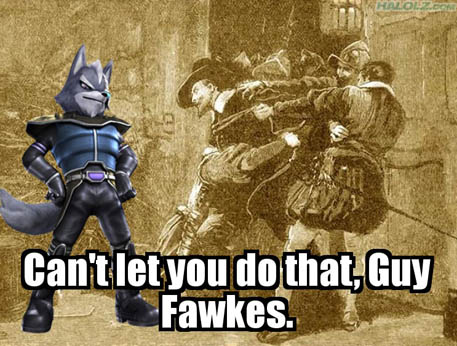
Whatever interpretation you might have of the "Shadow," I don't think the Hollow Men had a problem with criminal intent. Those skulls didn't just find their way onto Kurtz's pikes. And even furries know Guy Fawkes was totally going to blow the shit out of Parliament if he wasn't stopped.
But whatever. I guess in this case the "Shadow" stopped a 35-year-old man from driving the across the entire state of Indiana to have sex with what he thought was a 14-year-old girl.
So I guess you could say that this is the way the case ends: "Not with a bang but a whimper" Haha! See, I'm qualified to be a federal judge.
While the law may have abused Eliot's work, it still loves and protects him. There was also a federal case where a Ph.D. student at Columbia sued to force the CIA to release their confidential files about T.S. Eliot. DENIED. Sorry Columbia student, you will not have a dissertation chapter about Eliot's unpublished work "Old Possum's Book of Practical Counter-Insurgency Warfare". Too bad, in a way. That would have made a kick-ass Broadway show.

hahaha thats so your desk and van gogh poster
ReplyDeleteI want to go on record to say that I too am a person who thinks the use of literature in cases is funny, so keep 'em coming. In fact, I'd love for this to be a regular Lolsuits feature. I mean, I know there's some Bleak House and Wildean references in court cases that are so mind-blowingly bad that they are in fact awesome. It is your duty to share them with the world.
ReplyDeleteWell this one makes me think of my english class I'm going to take next year. Seeing as they're not going to offer English 4 H anymore, and I don't want to take AP lit, I'm just going start the English 0 class, in which you learn and read about incoherent babble...
ReplyDeleteI wasn't aware there was another type of English lit class
ReplyDelete